Everything I've built, written and taught, in the order it happened.
Software engineer in Dallas. Python, TypeScript, Go, Rust and .NET. Click any clip to open it.
Right now
- Building
- Browser DAW enginesince June 2026
- Writing 3 essays
- Building 1 live, 1 in progress
- Learning 3 in progress
- Community 2 appearances
- Mar 2023 Community: Engineer team lead, DSD cohort Dallas Software Developers
- Jun 2023 Building:
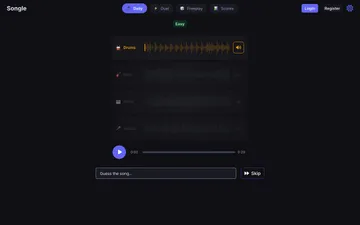 Songle Angular, .NET, Python, PostgreSQL, Docker
 - Sep 2024 Building: RSWebTWAIN Rust, Tauri v2, WebSocket, Angular, FFI
- Mar 2025 Building:
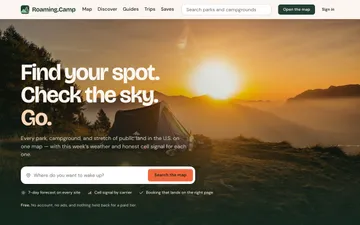 Roaming.Camp Next.js, Go, PostGIS, Mapbox, Docker
 - Apr 2025 Community: Talk: architecture patterns Dallas Software Developers
- Dec 2025 Writing: No One Cares About Your Work (And Why That's a Great Thing) Career Growth, Mental Health, Software Engineering, Leadership
- Dec 2025 Writing: Composition Over Inheritance in Angular: A Practical Guide Angular, TypeScript, Architecture, Best Practices
- Mar Community: Talk: developer productivity Dallas Software Developers
- May Writing: Creative Frontend Designs With AI AI, Frontend Design, Harness, LLM
- Jun Building: Browser DAW engine Rust, WASM, AudioWorklet, TypeScript
- Jul Writing: How Apps Like Redis Are So Efficient I/O Multiplexing, Redis, Performance, Architecture
- Sep Writing: I Won't Stop Coding Coding, AI, Mental Health, Fuuuuture
- Sep Community: Commit Your Code 2026 Dallas Software Developers
- Sep Learning: Foundations
- Sep Learning: Reading
- Sep Learning: Build
Community, March 2023 to February 2024
Engineer team lead, DSD cohort
Mentored aspiring developers through their learning journey, conducting code reviews and pair programming sessions.
Building, June 2023 to February 2024, live
Songle
A daily music guessing game where players identify songs from isolated audio stems — vocals, drums, bass, or instrumentation.
Building, September 2024 to April 2025
RSWebTWAIN
An open-source, headless Rust/Tauri desktop agent that bridges web browsers to TWAIN document scanners, replacing expensive proprietary libraries.
Building, March 2025 to June 2026, live
Roaming.Camp
A geospatial campsite discovery platform that unifies NPS, weather, cell coverage, and reservation data into a single interactive map.
Community, 1 April 2025
Talk: architecture patterns
Backend and frontend architecture patterns, for the Dallas Software Developers meetup.
Writing, 21 December 2025
No One Cares About Your Work (And Why That's a Great Thing)
Navigating the rough waters of being a Software Engineer in 2026
Writing, 30 December 2025
Composition Over Inheritance in Angular: A Practical Guide
How switching from class-based inheritance to composition patterns improves reusability and maintainability.
Community, 1 March 2026
Talk: developer productivity
Developer productivity, for the Dallas Software Developers meetup.
Writing, 16 May 2026
Creative Frontend Designs With AI
Harness design to give you unique frontends with agentic workflows
Building, in progress since June 2026
Browser DAW engine
Low-latency audio in the browser: Rust compiled to WASM, running inside an AudioWorklet with sample-accurate scheduling.
Writing, 22 July 2026
How Apps Like Redis Are So Efficient
The mechanism behind handling thousands of concurrent open connections.
Writing, 1 September 2026
I Won't Stop Coding
Why, in the era of Agentic Coding, I will still be coding by hand
Community, 3 September 2026
Commit Your Code 2026
Two days in Plano, learning modern AI concepts from the talks, sharing technical discussions with other engineers who are just as passionate about the work, and showing up for my local developer community.
Learning, in progress since September 2026
Foundations
Data-structures and algorithms fundamentals, courses then NeetCode 150.
Learning, in progress since September 2026
Reading
Reading deeply alongside the builds — the anchor books and a lighter read.
Learning, in progress since September 2026
Build
Building real systems from raw sockets up, one CodeCrafters course at a time.
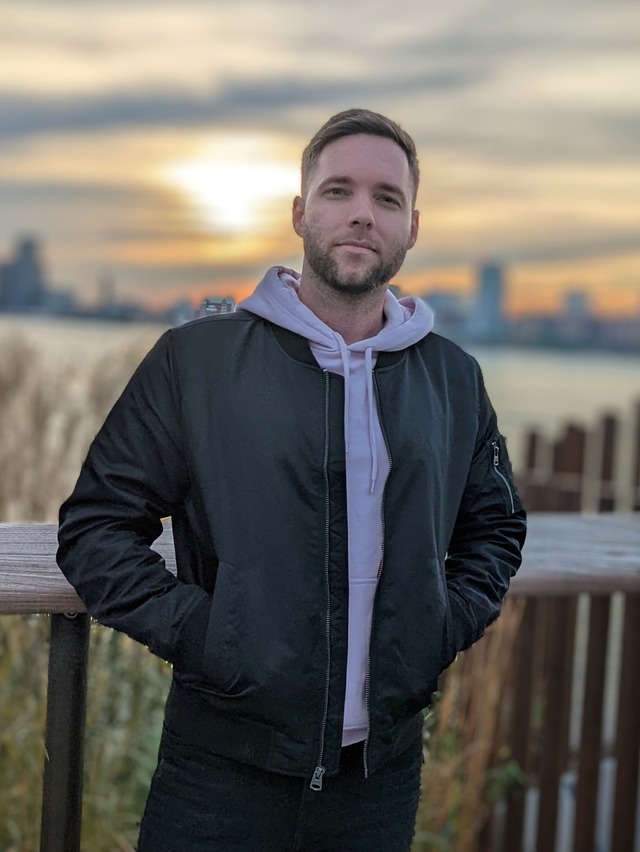
Get in touch
Whether you're looking for a software engineer who can hit the ground running, or you just want to talk shop about architecture patterns, I'd love to hear from you.